In today’s connected world, customers discover products, compare services, read reviews, and make purchase decisions online. As a result, businesses must establish a strong digital presence to remain competitive. Digital marketing enables organizations to reach potential customers through online platforms, communicate their value proposition effectively, and convert prospects into loyal clients.
Unlike traditional marketing methods that rely on print media, billboards, or television advertising, digital marketing provides measurable results, precise audience targeting, and scalable campaigns. Companies can track user behavior, analyze engagement metrics, and optimize marketing strategies in real time.
This guide explains what digital marketing is, how it works, its major channels, and why businesses must adopt it to succeed in the digital economy.
Digital Marketing Definition
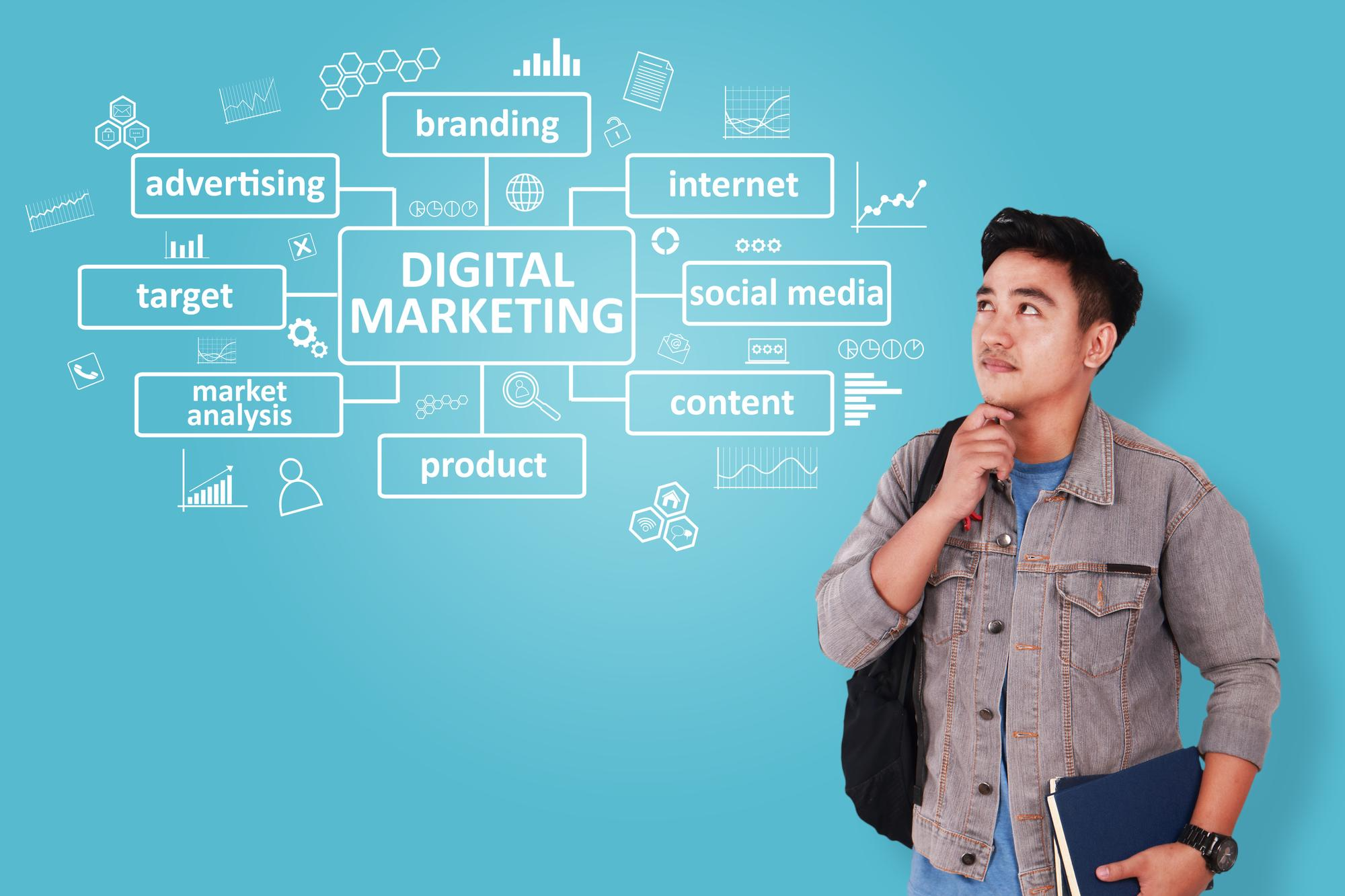
Digital marketing is the practice of promoting products and services using digital channels such as search engines, social media platforms, websites, email, and online advertising. It enables businesses to connect with targeted audiences, track marketing performance, and generate measurable business growth through data-driven strategies.
Quick Answer: “Digital marketing refers to the use of internet-based channels such as search engines, social media platforms, websites, email campaigns, and online advertising to promote products or services and engage customers.”
Why Digital Marketing is Important for Businesses
Digital marketing has transformed how businesses reach and interact with customers. Organizations can now communicate directly with their audience, measure marketing effectiveness, and refine campaigns based on real-time data.
Global Reach
Digital platforms allow businesses to reach audiences across cities, countries, and even continents without establishing physical offices.
Cost-Effective Marketing
Compared with traditional advertising channels, digital campaigns often require lower budgets while delivering better targeting and performance tracking.
Precise Audience Targeting
Businesses can target specific customer groups based on demographics, interests, location, and online behavior.
Measurable Performance
Analytics tools provide detailed insights into campaign performance, including website traffic, conversion rates, and customer engagement.
Improved Customer Engagement
Social media platforms and interactive digital content allow businesses to engage directly with their audience and build long-term relationships.
Key Channels of Digital Marketing
Digital marketing includes multiple channels that work together to create a comprehensive marketing strategy.
Search Engine Optimization (SEO)
Search Engine Optimization focuses on improving a website’s visibility in search engine results. By optimizing website content, structure, and technical performance, businesses can attract organic traffic from users searching for relevant products or services.
Pay Per Click Advertising (PPC)
PPC advertising allows businesses to display paid advertisements on search engines and social media platforms. Advertisers pay only when users click on their ads, making it an efficient method for lead generation.
Social Media Marketing
Social media platforms such as LinkedIn, Instagram, Facebook, and X enable businesses to connect with audiences, build brand awareness, and promote products or services through engaging content.
Content Marketing
Content marketing involves creating valuable resources such as blogs, videos, infographics, and guides to educate and attract potential customers.
Email Marketing
Email marketing allows businesses to communicate directly with customers through newsletters, promotional offers, and personalized messages.
Affiliate Marketing
Affiliate marketing involves partnering with individuals or organizations that promote products or services in exchange for commissions on sales.
Digital Marketing vs Traditional Marketing
Feature | Digital Marketing | Traditional Marketing |
Reach | Global audience | Local or regional audience |
Cost | Lower campaign costs | Higher advertising costs |
Targeting | Highly targeted | Broad audience targeting |
Measurement | Real-time analytics | Difficult to measure performance |
Engagement | Interactive communication | Limited interaction |
Digital marketing provides businesses with more flexibility, measurable performance, and higher return on investment compared with traditional marketing approaches.
The ProMentor Digital Growth Framework
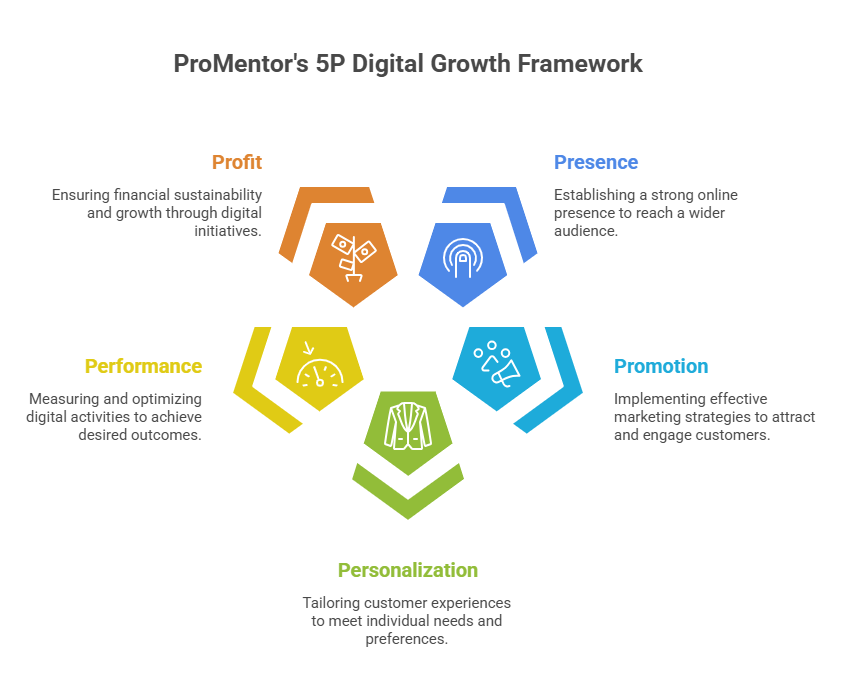
At ProMentor Digital Solutions, effective marketing strategies follow a structured approach known as the ProMentor Digital Growth 5P Framework.
Presence
Building a strong digital presence through optimized websites, social media profiles, and online platforms.
Promotion
Increasing visibility using search engine optimization, digital advertising, and social media campaigns.
Personalization
Delivering tailored customer experiences using targeted content and marketing automation tools.
Performance
Monitoring key metrics such as traffic, engagement, leads, and conversion rates.
Profit
Transforming marketing activities into measurable revenue growth and long-term business success.
How Digital Marketing Works
Digital marketing follows a systematic process that guides potential customers from awareness to purchase.
Audience Research
The process begins by identifying the target audience, understanding their needs, and analyzing their online behavior.
Strategy Development
Businesses create marketing strategies aligned with their objectives, target market, and available resources.
Channel Selection
Appropriate digital channels are selected based on where the target audience spends most of their time online.
Campaign Execution
Marketing campaigns are implemented using content, advertising, and engagement strategies.
Performance Monitoring
Data analytics tools track campaign performance, enabling businesses to optimize strategies and improve results.
Few Key digital Marketing Statistics
Several studies highlight the growing importance of digital marketing in modern business strategies.
- More than 5 billion people worldwide use the internet, creating vast opportunities for digital engagement.
- Over 70% of consumers research products online before making purchasing decisions.
- Businesses using digital marketing strategies often experience significantly higher lead generation and customer engagement compared with traditional marketing approaches.
These statistics illustrate why digital marketing has become essential for businesses of all sizes.
Expert Insight from ProMentor Digital Solutions
According to experts at ProMentor Digital Solutions, the most successful digital marketing strategies combine search visibility, targeted advertising, high-quality content, and data analytics. Businesses that integrate these elements into a unified strategy are more likely to achieve sustainable growth and improved customer acquisition.
Digital Marketing for Small Businesses and Startups
Digital marketing provides startups and small businesses with powerful tools to compete with larger organizations. By leveraging strategies such as SEO, social media marketing, and content marketing, small companies can build brand visibility and attract customers without large advertising budgets.
Many businesses partner with digital marketing agencies to design and manage campaigns that generate leads and drive growth.
Key Takeaways
- Digital marketing uses online channels to promote products and services.
- Major digital marketing channels include SEO, PPC advertising, social media marketing, content marketing, and email marketing.
- Digital marketing allows businesses to reach targeted audiences with measurable results.
- Businesses can generate leads, increase brand visibility, and improve customer engagement through digital strategies.
- Artificial intelligence and marketing automation are shaping the future of digital marketing.
Frequently Asked Questions
What are digital marketing services?
Digital marketing services include activities such as search engine optimization, social media marketing, pay-per-click advertising, content marketing, email marketing, and website optimization aimed at promoting businesses online.
How does digital marketing work?
Digital marketing works by attracting potential customers through online channels, engaging them with valuable content, and converting them into paying customers using targeted campaigns.
What are the main types of digital marketing?
The main types of digital marketing include SEO, PPC advertising, social media marketing, content marketing, email marketing, and affiliate marketing.
Is digital marketing suitable for small businesses?
Yes. Digital marketing is highly effective for small businesses because it enables targeted marketing with lower budgets and measurable results.
How much does digital marketing cost?
The cost of digital marketing varies depending on the services, campaign objectives, and advertising budgets. Businesses can start with smaller investments and scale campaigns as they grow.
How long does digital marketing take to show results?
Paid advertising campaigns can generate immediate results, while organic strategies such as SEO typically take several months to deliver consistent traffic growth.
Digital Marketing Summary
Digital marketing is the process of promoting products and services using online channels such as search engines, social media platforms, websites, email campaigns, and digital advertisements. It enables businesses to reach targeted audiences, track campaign performance, and generate measurable business growth through data-driven marketing strategies.
About the Author
Dr. Deepak S. Verma is the Founder of ProMentor Digital Solutions and ProMentor Academy. He specializes in digital marketing strategy, training, and consulting, helping businesses leverage digital technologies to generate leads, build strong brands, and achieve sustainable growth.