
ProMentor Digital Solutions | Digital Marketing Agency in India | ROI-Driven SEO, PPC & Social Media
You are running Google Ads. Your ad is getting clicks — you are paying ₹40, ₹80, sometimes ₹150 per click. Those visitors land on your homepage. And then they leave. No enquiry. No call. No lead.
This is one of the most expensive and most common problems for small businesses in India running digital marketing campaigns. The ad is not the problem. The destination is.
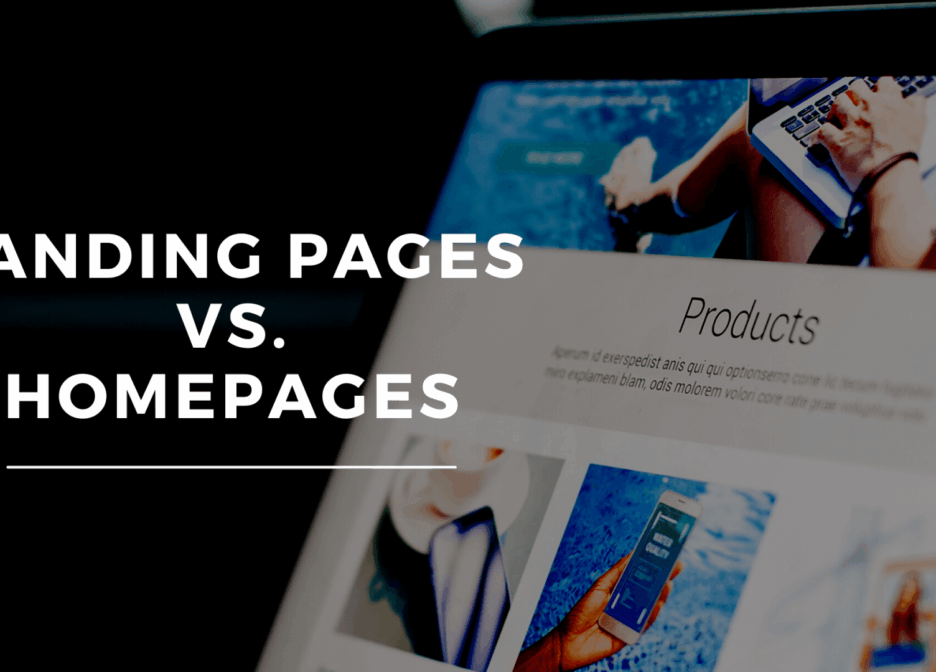
A homepage is designed to introduce your entire business — it tries to be everything to everyone. A landing page is designed to do exactly one thing: convert a specific visitor with a specific need into a lead. When you send paid traffic to a homepage instead of a landing page, you are pouring water into a leaking bucket.
In this guide, you will learn what a landing page is, how it differs from your website, the nine elements every high-converting landing page must have, the most common mistakes that kill conversions, and a step-by-step process to build one — even with a limited budget.
When you decide to invest in Google Ads , your landing page is the first thing that determines whether that investment pays off.
These three terms confuse many small business owners — and the confusion costs them conversions every day. Here is the clearest way to understand the difference:
| Feature | Homepage | Website (inner pages) | Landing Page |
|---|---|---|---|
| Purpose | Introduce brand, navigate visitors | Inform and educate | Convert one specific visitor action |
| Navigation menu | Yes — full menu | Yes — full menu | No — deliberately removed |
| Number of CTAs | Multiple (4–10+) | 2–5 | One (repeated 2–3×) |
| Content focus | Broad — entire business | Topic-specific | Single offer / single audience |
| Traffic source | All sources | Organic search, internal | Ads, email, social campaigns |
| Typical conversion rate | 0.5–1.5% | 1–3% | 2–15%+ (when well-optimised) |
| Best used for | Brand presence, general discovery | SEO, product education | Paid ad campaigns, lead gen |
The key insight: every marketing campaign — Google Ad, Facebook Ad, email campaign, influencer post — should send traffic to a dedicated landing page, not your homepage. The more specific the page matches the ad’s message, the higher your conversion rate will be. This principle is called message match, and it is the single most important concept in landing page design.
“Organic search traffic from your local SEO strategy should go to relevant service pages, not landing pages.”
Every high-performing landing page for small businesses — regardless of industry — contains these nine elements. Remove any one of them, and your conversion rate will suffer.
Weak: “Welcome to ProMentor Digital Solutions”
Strong: “Get More Customers from Google — Without Spending More on Ads”
Formula: [Achieve desired outcome] + [in specific timeframe] + [without specific pain point]. Not every element needs to be present, but this framework reliably produces strong headlines.
To make this concrete, here is how the same digital marketing agency might present itself differently on a homepage versus a purpose-built landing page for a Google Ads campaign targeting “SEO agency Delhi.”
Sending ads to homepage Dedicated SEO landing page Fix: Build a dedicated landing page for every campaign. Match the headline and offer precisely to the ad that drove the click. Fix: Rewrite your headline around the visitor’s outcome. What specific result will they achieve by choosing you? Fix: Keep forms to 3 fields maximum at the top of the funnel. Name + Phone + one qualifying question is all you need for a first contact. Fix: Place your strongest testimonial or a Google review count badge directly below your headline — before the visitor even reaches your benefits list. Fix: Run your page through Google PageSpeed Insights (free). Target a mobile score of 80+. Compress all images to under 150KB using tools like TinyPNG or Squoosh. Fix: Test one element at a time. Start with the headline — it has the highest impact. Run each test for at least 500 visitors before drawing conclusions.You do not need a large budget or a developer to build a functional, high-converting landing page. Here is a practical path based on your resources:
| Budget level | Recommended approach | Tools | Estimated cost |
|---|---|---|---|
| DIY (₹0–₹2,000/month) | Use a landing page builder with templates | Carrd, Mailchimp Landing Pages, Google Sites | Free – ₹1,500/month |
| Semi-DIY (₹2,000–₹8,000/month) | WordPress + landing page plugin | Elementor, WPBakery, Beaver Builder | ₹2,000–₹5,000/month |
| Professional (₹15,000–₹50,000 one-time) | Custom designed + built by an agency | WordPress, Webflow, or custom HTML | ₹15,000–₹50,000 one-time + ₹2,000/month hosting |
| Enterprise (₹50,000+) | Full conversion optimisation + A/B testing setup | Unbounce, HubSpot, custom development | ₹50,000+ one-time + monthly retainer |
For most small businesses in India just starting out, a professionally designed landing page built on WordPress with Elementor — costing ₹15,000–₹25,000 one-time — delivers the best balance of quality, flexibility, and cost. This is exactly what ProMentor builds for clients before launching their Google Ads campaigns.
“Working with a digital marketing agency to build and optimise your landing page typically delivers the best conversion results at the lowest long-term cost.”
Run through every item before going live. Click to track your progress.



Unleash the full potential of your digital presence with our all-in-one marketing solutions.