
ProMentor Digital Solutions | Digital Marketing Agency in India | ROI-Driven SEO, PPC & Social Media
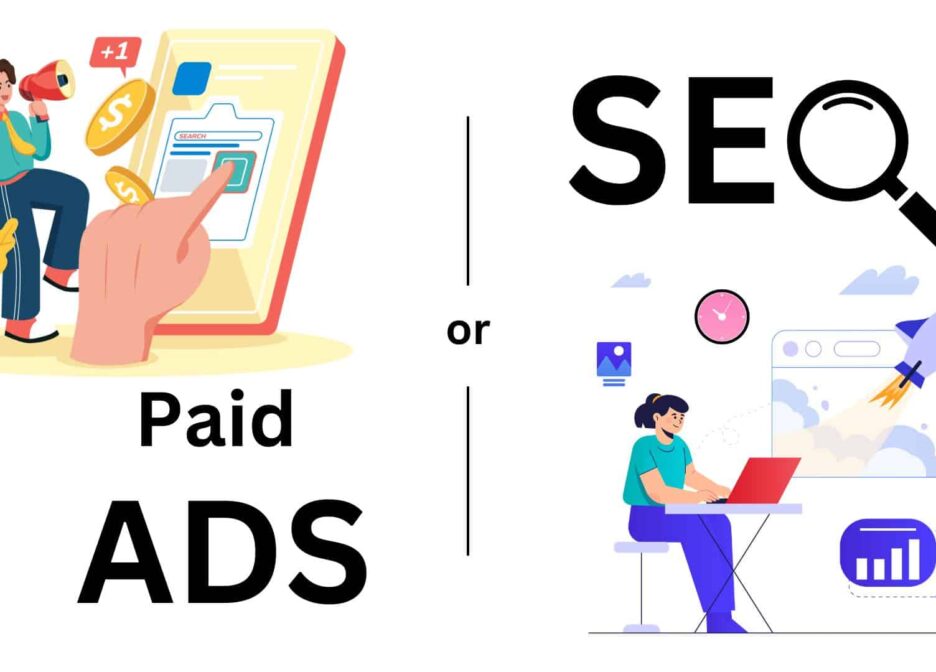
You have a limited marketing budget. Every rupee needs to work. And you have been told by different people that SEO is the best investment — and also that Google Ads is the fastest way to grow. Both camps sound convincing. Both are partly right.
“Both SEO and paid ads are core pillars of a broader digital marketing strategy — but they work in fundamentally different ways.”
The confusion is understandable. SEO and paid ads both put your business in front of people searching for what you sell. But they work in completely different ways, on completely different timelines, and with completely different risk profiles.
This guide cuts through the noise. By the end, you will know exactly which channel makes sense for your business right now — and how to think about combining both as you grow.
SEO is the process of optimising your website and online presence so that Google ranks you higher in organic (non-paid) search results. When someone searches “digital marketing agency Delhi” and clicks on a result that is not an ad, that is organic traffic driven by SEO.
SEO works by improving three things: the technical health of your website (so Google can crawl and understand it), the quality and relevance of your content (so Google ranks it for the right queries), and the authority of your website (measured through backlinks from other credible sites).
The payoff is significant — but it is slow. Most small businesses in India begin seeing meaningful organic traffic improvements 4–8 months after starting SEO, and reach competitive rankings in 9–18 months for moderately competitive keywords. Once ranked, that traffic continues arriving every day — without ongoing spend.
Paid advertising — primarily Google Ads (search and display) and Meta Ads (Facebook and Instagram) — lets you pay for visibility. With Google Ads, you bid on keywords and your ad appears at the top of search results, marked “Sponsored,” when someone searches for those terms. With Meta Ads, you pay to show your content to precisely defined audiences based on demographics, interests, and behaviours.
The payoff is immediate — your ad can be live and generating clicks within hours of setup. The tradeoff is equally immediate: the moment you stop paying, the traffic stops. Unlike SEO, paid ads build no compounding asset. They are a tap — on when you pay, off when you don’t.
| Factor | SEO | Paid Ads (Google / Meta) | Winner |
|---|---|---|---|
| Speed to first result | 4–12 months to meaningful traffic | Hours to days — live immediately | Paid |
| Long-term cost | Lower — traffic continues without ongoing spend once ranked | Higher — must keep paying for every click, forever | SEO |
| Traffic quality | High intent — users trust organic results more | High intent (search ads) to variable (display/social) | SEO |
| Click-through rate | ~28% for position 1 in organic results | ~2–6% average CTR for search ads | SEO |
| Targeting precision | Limited — you optimise for keywords, not demographics | Very precise — age, location, interest, device, time | Paid |
| Budget requirement | ₹8,000–₹30,000/month for professional SEO | ₹15,000–₹1,00,000+/month in ad spend + management | SEO |
| Compounding returns | Yes — rankings and authority grow over time | No — each campaign starts from zero | SEO |
| Measurability | Good — but attribution is indirect (months delay) | Excellent — real-time cost per click, per lead, per sale | Paid |
| Competition sensitivity | Competitive niches are hard but winnable over time | Highly competitive keywords can make CPCs unaffordable | Context-dependent |
| Sustainability | High — Google algorithm updates notwithstanding | Low — costs rise as competition increases | SEO |
| Best for | Long-term brand building, sustained lead generation | Product launches, seasonal offers, immediate leads | Different goals |
“Whether you invest in SEO or paid ads, choosing the right digital marketing partner determines how effectively that budget is spent.”
The most useful mental model for this decision is this: paid ads are renting traffic, SEO is building a property you own.
When you run Google Ads, you are renting visibility on Google’s platform. It delivers results, but the asset belongs to Google — not you. The day you stop paying, your presence disappears entirely. Over time, as more competitors bid on the same keywords, your cost per click increases while your ownership of that visibility remains at zero.
When you invest in SEO, you are building an owned asset — your website’s authority, your content library, your backlink profile. These do not disappear when you stop paying an agency. They compound. A blog article published today can still be generating organic leads three years from now. A Google Ad from today stops generating leads the moment the campaign ends.
For small businesses in India with long-term growth ambitions, this distinction is critical. SEO builds equity. Paid ads build volume — but that volume is contingent on continued spend.
You need leads within the next 30–90 days
Recommendation: Start with paid adsIf your business has an urgent revenue need — a new product launch, seasonal demand, or you simply cannot wait 6+ months for SEO to kick in — paid ads are the right starting point. Google Ads can deliver qualified leads within days of going live. Use them to generate immediate cash flow while your SEO foundation is being built in parallel.
You sell a product with high, immediate purchase intent
Recommendation: Prioritise paid adsIf someone is searching “buy [product] in Delhi” or “best price [service] near me,” they are ready to purchase now. Google Shopping ads and search ads capture this bottom-of-funnel intent with extreme precision — often better than SEO, which takes time to rank for transactional keywords.You have a seasonal or event-driven business
Recommendation: Paid ads for seasonal peaksBusinesses that rely on wedding season, festival shopping, financial year-end, or academic admission periods cannot wait for SEO’s long timeline. Paid ads let you surge your visibility exactly when demand is highest, and scale down spend in off-season — something SEO cannot do with the same precision.
You are testing a new market or offer
Recommendation: Paid ads to validate firstBefore investing 12 months of SEO effort into a market or service, use paid ads to test demand in 2–4 weeks. If the ads generate leads at an acceptable cost, you have validated the market. Then invest in SEO to build a sustainable channel. This is the smart sequencing many experienced marketers use.
You are building a long-term business and can wait 6–12 months
Recommendation: Invest in SEO earlyThe earlier you start SEO, the earlier the compounding returns begin. A business that starts SEO today and waits patiently will have a significant, defensible advantage over a competitor who starts in 12 months. Time is the most valuable ingredient in SEO — starting late is the single biggest SEO mistake small businesses make.“Local SEO for small businesses is often the fastest and most affordable organic channel to start with.”
Your paid ad costs (CPCs) are too high to sustain profitably
Recommendation: Pivot to SEOIn competitive industries — legal services, finance, real estate, healthcare — Google Ads CPCs in India can reach ₹200–₹500+ per click. At those prices, many small businesses cannot achieve a profitable cost per lead. SEO becomes the only sustainable path to organic visibility when paid ads are economically out of reach.“Start with Google Business Profile optimisation — it is free and delivers local ranking results within 2–4 months.”
Your business generates leads through education and content
Recommendation: SEO and content marketingIf your customers research extensively before buying — consulting, professional services, B2B services, high-ticket products — SEO-driven content marketing is your most powerful channel. Blog articles, guides, and comparison content build trust and authority during the research phase, making the conversion to a paying client much more natural and less friction-heavy.
The question “SEO or paid ads?” presents a false binary. The most effective digital marketing strategies for small businesses in India do not choose one — they use both, sequenced intelligently.
Here is the framework ProMentor recommends for small businesses with limited budgets:
| Cost element | SEO | Google Ads (Search) | Meta Ads (Facebook/Instagram) |
|---|---|---|---|
| Monthly agency / management fee | ₹8,000 – ₹30,000 | ₹8,000 – ₹20,000 | ₹8,000 – ₹20,000 |
| Monthly ad spend (to the platform) | Nil | ₹15,000 – ₹1,00,000+ | ₹10,000 – ₹75,000+ |
| Time to first result | 4–8 months | 1–7 days | 1–3 days |
| Traffic continuity if you stop paying | Continues (diminishes slowly) | Stops immediately | Stops immediately |
| Average cost per lead (competitive vertical) | ₹200 – ₹800 (at maturity) | ₹500 – ₹3,000+ | ₹300 – ₹2,000+ |
| 12-month total investment (small business) | ₹96,000 – ₹3,60,000 | ₹2,76,000 – ₹14,40,000+ | ₹2,16,000 – ₹11,40,000+ |
Note: These are representative ranges for small businesses in India. Actual costs vary significantly by industry, city, competition level, and campaign quality. High-competition industries (legal, real estate, finance) sit at the upper end of these ranges or beyond.



Unleash the full potential of your digital presence with our all-in-one marketing solutions.