
What is a Landing Page? How to Build One That Actually Converts Visitors into Leads (2026)
Quick AnswerA landing page is a dedicated, standalone web page that a visitor “lands on” after clicking an ad, email link, or search result — and it has one sole purpose: to get the visitor to take a specific action. That action might be filling in an enquiry form, calling your business, downloading a guide, booking a consultation, or making a purchase. Unlike a full website, a landing page has no navigation menu, no links to other pages, and no distractions — just a focused message and a single call to action.
You are running Google Ads. Your ad is getting clicks — you are paying ₹40, ₹80, sometimes ₹150 per click. Those visitors land on your homepage. And then they leave. No enquiry. No call. No lead.
This is one of the most expensive and most common problems for small businesses in India running digital marketing campaigns. The ad is not the problem. The destination is.
A homepage is designed to introduce your entire business — it tries to be everything to everyone. A landing page is designed to do exactly one thing: convert a specific visitor with a specific need into a lead. When you send paid traffic to a homepage instead of a landing page, you are pouring water into a leaking bucket.
In this guide, you will learn what a landing page is, how it differs from your website, the nine elements every high-converting landing page must have, the most common mistakes that kill conversions, and a step-by-step process to build one — even with a limited budget.
When you decide to invest in Google Ads , your landing page is the first thing that determines whether that investment pays off.

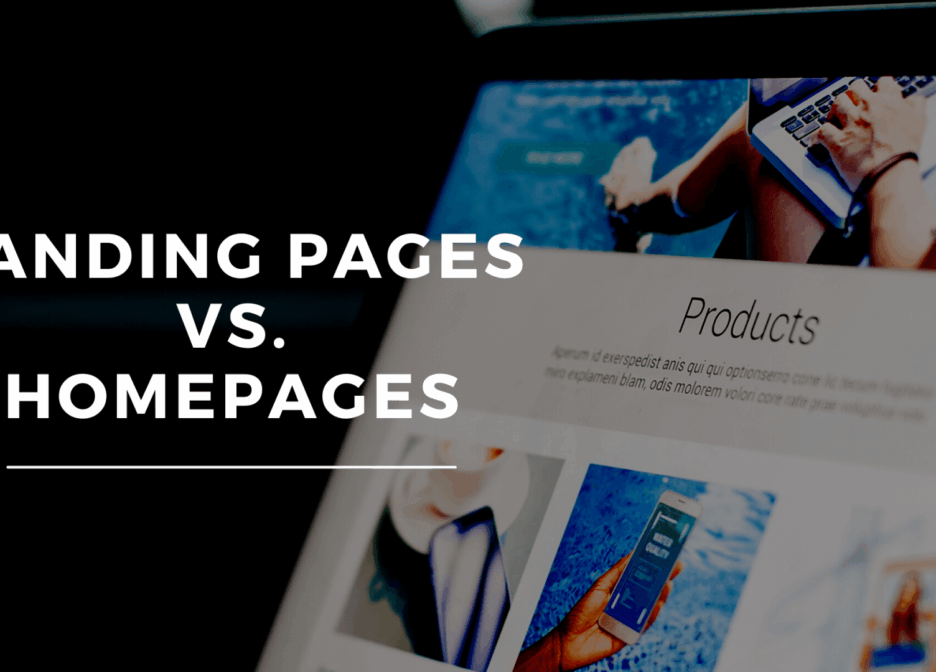
Landing page vs website vs homepage: what is the difference?
These three terms confuse many small business owners — and the confusion costs them conversions every day. Here is the clearest way to understand the difference:
| Feature | Homepage | Website (inner pages) | Landing Page |
|---|---|---|---|
| Purpose | Introduce brand, navigate visitors | Inform and educate | Convert one specific visitor action |
| Navigation menu | Yes — full menu | Yes — full menu | No — deliberately removed |
| Number of CTAs | Multiple (4–10+) | 2–5 | One (repeated 2–3×) |
| Content focus | Broad — entire business | Topic-specific | Single offer / single audience |
| Traffic source | All sources | Organic search, internal | Ads, email, social campaigns |
| Typical conversion rate | 0.5–1.5% | 1–3% | 2–15%+ (when well-optimised) |
| Best used for | Brand presence, general discovery | SEO, product education | Paid ad campaigns, lead gen |
The key insight: every marketing campaign — Google Ad, Facebook Ad, email campaign, influencer post — should send traffic to a dedicated landing page, not your homepage. The more specific the page matches the ad’s message, the higher your conversion rate will be. This principle is called message match, and it is the single most important concept in landing page design.
“Organic search traffic from your local SEO strategy should go to relevant service pages, not landing pages.”
The 9 essential elements of a high-converting landing page
Every high-performing landing page for small businesses — regardless of industry — contains these nine elements. Remove any one of them, and your conversion rate will suffer.
1.Benefit-led headlineMust-have
Weak: “Welcome to ProMentor Digital Solutions”
Strong: “Get More Customers from Google — Without Spending More on Ads”
Formula: [Achieve desired outcome] + [in specific timeframe] + [without specific pain point]. Not every element needs to be present, but this framework reliably produces strong headlines.
2.Supporting subheadlineMust-have
Example: “ProMentor helps small businesses in Delhi and NCR rank on Google Maps and generate inbound leads through proven local SEO — typically within 90 days.”
3.Hero image or videoMust-have
India-specific: A real photo of your office, team, or a WhatsApp testimonial screenshot builds significantly more trust with Indian audiences than polished stock images, which are widely recognised as generic.
4.Clear benefits (not features)Must-have
Feature: “We run Google Ads campaigns”
Benefit: “Start getting phone calls from local customers within 7 days of your campaign going live”
5.Social proofMust-have
Specificity wins: “ProMentor helped us get 14 qualified leads in our first month” is 10× more persuasive than “Great service, highly recommend.” Push clients to provide specific outcomes, not vague praise.
6.Single, clear call to action (CTA)Must-have
Weak CTA: “Submit” or “Contact Us”
Strong CTA: “Book My Free 30-Minute Strategy Call” or “Get My Free SEO Audit”
For Indian audiences, WhatsApp CTAs often outperform form CTAs — especially on mobile. Consider “Chat with us on WhatsApp” as your primary CTA for mobile visitors, with a form as the desktop default.
7.Lead capture formMust-have
Minimum viable form: Name + Phone Number + “What is your main marketing challenge?” (dropdown, not text field)
8.Trust signals High priority
9.Mobile optimisation & page speedMust-have
India network reality: Many Tier 2 and Tier 3 city users are on 4G with variable speeds. Test your landing page on a throttled 3G connection using Chrome DevTools — if it takes more than 4 seconds to load, you are losing leads.
Landing page vs homepage: a before/after example
To make this concrete, here is how the same digital marketing agency might present itself differently on a homepage versus a purpose-built landing page for a Google Ads campaign targeting “SEO agency Delhi.”
The 6 most common landing page mistakes small businesses make in India
1. Sending ad traffic to the homepage
2. A vague or self-centred headline
3. Too many form fields
4. No social proof above the fold
5. Slow page load speed on mobile
6. No A/B testing — ever
How to build a landing page on a small business budget in India
You do not need a large budget or a developer to build a functional, high-converting landing page. Here is a practical path based on your resources:
| Budget level | Recommended approach | Tools | Estimated cost |
|---|---|---|---|
| DIY (₹0–₹2,000/month) | Use a landing page builder with templates | Carrd, Mailchimp Landing Pages, Google Sites | Free – ₹1,500/month |
| Semi-DIY (₹2,000–₹8,000/month) | WordPress + landing page plugin | Elementor, WPBakery, Beaver Builder | ₹2,000–₹5,000/month |
| Professional (₹15,000–₹50,000 one-time) | Custom designed + built by an agency | WordPress, Webflow, or custom HTML | ₹15,000–₹50,000 one-time + ₹2,000/month hosting |
| Enterprise (₹50,000+) | Full conversion optimisation + A/B testing setup | Unbounce, HubSpot, custom development | ₹50,000+ one-time + monthly retainer |
For most small businesses in India just starting out, a professionally designed landing page built on WordPress with Elementor — costing ₹15,000–₹25,000 one-time — delivers the best balance of quality, flexibility, and cost. This is exactly what ProMentor builds for clients before launching their Google Ads campaigns.
“Working with a digital marketing agency to build and optimise your landing page typically delivers the best conversion results at the lowest long-term cost.”
Your pre-publish landing page checklist
Run through every item before going live. Click to track your progress.

- Headline is benefit-led — focuses on visitor outcome, not business features
- Subheadline names the target audience and explains the “how” in 1–2 sentences
- Body copy uses “you” language throughout — not “we” or “our”
- CTA button text is action-specific (not “Submit” or “Contact Us”)
- Ad headline and landing page headline match (message match verified)
- Navigation menu completely removed from the page
- Single primary CTA — no competing buttons or links
- CTA button is visible above the fold without scrolling (on mobile)
- Page layout is single-column on mobile — no horizontal scrolling
- Hero image is a real photo, not a stock image
- At least one client testimonial above the fold with full name + city
- Google review count and star rating badge displayed
- Years in business or number of clients served shown prominently
- Privacy assurance text placed directly below the form
- Google PageSpeed mobile score is 80 or above
- All images compressed under 150KB (checked via TinyPNG or Squoosh)
- Form tested — submissions are landing in your inbox or CRM
- WhatsApp CTA tested on mobile — opens pre-filled message correctly
- Google Analytics 4 conversion event tracking verified and firing
Frequently asked questions about landing pages
A website is a multi-page digital presence covering your entire business — products, services, about, blog, contact. A landing page is a single, focused page with no navigation and one purpose: converting a specific visitor into a lead or customer. Your website is your storefront; a landing page is a dedicated sales counter designed for one specific product or campaign.
The average landing page conversion rate across industries is 2.35%. A well-optimised landing page for a service business in India should aim for 5–10%. Top-performing pages with strong social proof, fast load speeds, and precise message match regularly achieve 10–20%. If your landing page is converting below 2%, it signals a fundamental issue — typically with the headline, social proof, or page speed — that needs immediate attention before continuing to spend on ads.
Landing page length should match the complexity of your offer and the level of trust required to convert. For simple, low-commitment actions (free consultation, free audit, WhatsApp enquiry), a short landing page — headline, 3–5 benefits, testimonials, form, and CTA — is ideal. For higher-commitment actions (signing a contract, making a significant purchase), a longer page with detailed proof, case studies, FAQs, and multiple CTA placements typically converts better. When in doubt, test both.
Yes — if you are running any paid advertising or specific marketing campaigns. Your website’s homepage and service pages are designed for organic visitors who are exploring. A landing page is specifically designed for a visitor who clicked a specific ad, email, or campaign link and has a specific need in mind. Sending that visitor to your homepage instead of a matching landing page is one of the most common and costly conversion mistakes in digital marketing.
For most small businesses in India, especially in B2C sectors, WhatsApp CTAs outperform traditional contact forms on mobile devices. Indian consumers are highly comfortable initiating business conversations on WhatsApp and trust it more than unfamiliar web forms. The ideal approach is to A/B test both — but as a starting point, use a WhatsApp CTA as the primary button on mobile and a form for desktop visitors. Many agencies see 2–3× higher enquiry rates from WhatsApp CTAs versus forms in Indian markets
Landing page costs in India vary widely: a basic DIY page using free tools like Carrd costs nothing; a WordPress + Elementor page built by a freelancer typically costs ₹8,000–₹20,000; a professionally designed, conversion-optimised page built by a digital agency costs ₹20,000–₹60,000. For businesses running Google Ads, a well-built landing page pays for itself within the first month by dramatically improving the conversion rate on ad spend.
Track these four metrics in Google Analytics 4 or your ad platform: conversion rate (form fills or CTA clicks ÷ total visitors), bounce rate (visitors who leave without taking any action), average time on page (longer is better — it signals the page content is being read), and cost per lead (total ad spend ÷ number of leads generated). If your conversion rate is below 2% and bounce rate is above 70%, your landing page needs significant improvement before you continue spending on ads.
Key takeaways
A landing page is a single-purpose, distraction-free web page designed to convert a specific visitor into a lead or customer — fundamentally different from a homepage or service page.
The average landing page converts at 2.35%, but well-optimised pages for Indian small businesses achieve 8–15%. The gap is almost entirely down to nine essential elements.
Message match — aligning your landing page headline precisely with your ad copy — is the single highest-impact conversion optimisation you can make.
Never send paid ad traffic to your homepage. Every campaign deserves a dedicated landing page. This is the single most expensive mistake small businesses make in digital marketing.
For Indian audiences, WhatsApp CTAs on mobile and short 3-field forms consistently outperform Western-style long contact forms. Test WhatsApp as your primary mobile CTA.
Page speed is non-negotiable — 53% of Indian mobile users abandon pages that take more than 3 seconds to load. Compress images, minimise scripts, and target a PageSpeed score of 80+.
A/B test one element at a time, starting with the headline. Even small improvements compound significantly over the lifetime of a campaign.