

ProMentor Digital Solutions | Digital Marketing Agency in India | ROI-Driven SEO, PPC & Social Media

How to Get Your Business on the First Page of Google: 10 Actionable Steps (2026)

TL;DR — THE 10 ACTIONS THAT GET YOU TO PAGE 1

Getting your business on the first page of Google requires consistent action across 10 areas: (1) set up and optimise your Google Business Profile for local search, (2) do keyword research and target low-competition terms, (3) optimise your on-page SEO for every core page, (4) create high-quality keyword-targeted content consistently, (5) fix your technical SEO foundation, (6) build local citations and directory listings, (7) earn backlinks from reputable sources, (8) improve your Core Web Vitals and page speed, (9) build an internal linking structure, and (10) track everything in Google Search Console. None of these require a large budget. All require consistency. This guide gives you the specific actions for each step.

QUICK ANSWER

Getting on the first page of Google requires two things working together: relevance (your content and pages must closely match what the searcher is looking for) and authority (Google must trust your website as a credible source). For most small businesses in India, the fastest path to page 1 is combining local SEO (Google Maps / Local Pack) with long-tail keyword targeting in blog content — both of which are achievable within 3–6 months with consistent effort and no paid ad spend.

Every small business owner in India wants the same thing from Google: to appear at the top when a potential customer searches for their service. The reality is that most never get there — not because it is impossible, but because they do not know the specific actions required, and they underestimate how consistently those actions need to be executed. For the realistic SEO timeline and what to expect month by month, read our dedicated guide.

Getting on the first page of Google is not a single tactic. It is the accumulated result of doing 10 interconnected things correctly over a sustained period. The businesses ranking on page 1 in your city and industry have not found a secret. They have simply been doing these 10 things more consistently and more correctly than their competitors.

This guide gives you the exact actions. It is structured so you can start with the highest-impact steps first and build systematically from there. Whether you are starting from zero or trying to move from page 3 to page 1, these are the steps that get results.

75%

of users never scroll past the first page of Google search results

HubSpot, 2024

32%

of all search traffic goes to the first organic result on page 1

Backlinko, 2024

91%

of pages get zero traffic from Google — because they are buried on page 2+

Ahrefs, 2024

3–6 mo

typical time for a consistently-optimised small business to reach page 1 for long-tail keywords

ProMentor data


The two paths to page 1 of Google — and which to prioritise first

There are two distinct ways to appear on the first page of Google, and most small businesses ignore one of them entirely:

PathWhat it isHow quicklyBest starting point for
Google Local Pack (Maps)The 3-business map block that appears at the top of local search results2–4 months with a fully optimised GBPAny business serving local customers — the fastest path to visible Google presence
Organic page 1 rankingsYour website appearing in the 10 blue link results below the Local Pack4–12 months depending on competition and keyword difficultyBusinesses with 3+ months of content publishing and basic technical SEO in place

The strategic sequence:  Start with the Google Local Pack — it is faster, free, and driven primarily by your Google Business Profile which you can optimise in an afternoon. Build organic rankings in parallel through consistent content publishing. By month 6, you should have both working together, giving your business two separate page-1 presences for the same local search query.

The 10 actions that get your business on the first page of Google

Action 1:  Set up and fully optimise your Google Business Profile

Your Google Business Profile (GBP) is the single most important free asset for appearing on Google’s first page as a local business. A fully optimised GBP — with the right primary category, complete services list, regular photo uploads, weekly Google Posts, and an active review collection system — is your fastest and most direct path to appearing in the Local Pack that sits above all organic results. 56% of small businesses have not claimed theirs (BrightLocal, 2024) — meaning your competition for the Local Pack is lower than it appears. Your GBP optimisation is the foundation of your local SEO strategy — the fastest path to appearing in the Local Pack above all organic results

Quick win:  Spend 2–3 hours this week completing every field in your GBP: add all secondary categories, write a keyword-rich description that includes your city and primary services, upload 10+ real photos, and create your first Google Post linking to a blog article.

Timeline:  Local Pack visibility: 6–10 weeks for initial Local Pack appearances after full GBP optimisation. Competitive Local Pack positions: 2–4 months with consistent reviews and posting.

We cover exactly how to set up and optimise your Google Business Profile in a dedicated step-by-step guide.

Action 2:  Research and target low-competition, long-tail keywords

The single biggest reason most small businesses never reach page 1 is targeting keywords that are far too competitive for their current domain authority. ‘Digital marketing’ is dominated by companies with 10+ years of domain authority. ‘Digital marketing agency for restaurants in Delhi’ is a realistic page-1 target for a new website within 4–6 months. Every piece of content you create should target a keyword with a Difficulty score below 40 and at least 100 monthly searches in India. Build a keyword map with one primary keyword per page before writing a single word. Use our complete keyword research guide to build your full keyword map before writing any content.

Quick win:  Use Ubersuggest (free) to check Keyword Difficulty for your 10 most important target terms. Any keyword with KD below 30 and 100–1,000 monthly searches is your priority content target for the next 90 days.

Timeline:  First page-1 rankings for Priority 1 keywords (KD < 30): 2–4 months. Medium competition keywords (KD 30–50): 5–9 months.

Action 3:  Optimise your on-page SEO for every core page

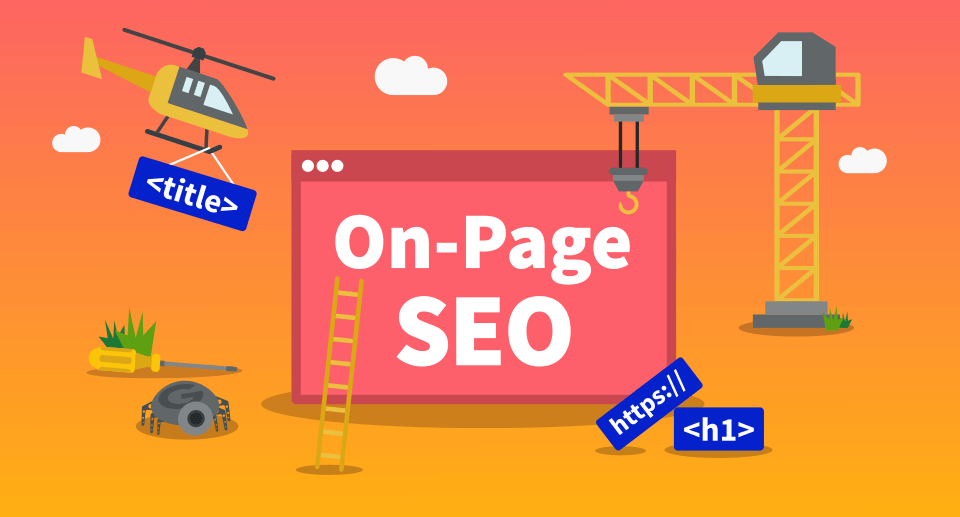
On-page SEO is the practice of signalling to Google exactly what each page is about through the precise placement of your target keywords. For every core page (homepage, service pages, key blog articles), ensure: your primary keyword appears in the HTML title tag (50–60 chars), the meta description (150–160 chars), the H1 heading, the first 100 words of body content, at least one H2 subheading, and the image alt text. Use your keyword naturally — do not stuff. Google’s algorithm reads pages the way an intelligent human does: unnatural keyword repetition reduces Quality Score rather than improving it.

Quick win:  Run a free on-page audit on your top 5 pages using Neil Patel’s SEO Analyzer (free). Fix the title tag and meta description of every page that is missing them or has them incorrectly formatted — this alone can produce ranking improvements within 4–6 weeks.

Timeline:  On-page improvements: ranking improvements visible in Google Search Console within 4–8 weeks of implementation across well-indexed pages.

Action 4:  Publish one high-quality, keyword-targeted article every week

Content is the most powerful long-term driver of first-page rankings. Each article you publish is a new entry point into Google — a new page that can rank for a new keyword and bring new visitors to your website. But quality matters enormously: a 2,000-word article that genuinely answers a specific question better than any competitor is worth more than 10 thin 300-word posts. Use the ProMentor article blueprint: TL;DR box, quick-answer paragraph, 4–6 data-backed H2 sections, an FAQ section with schema markup, and a single conversion CTA. Every article activates and receives internal links from related articles, compounding your topical cluster authority over time. Each article you publish is part of a broader content marketing strategy — one that compounds in value every month.

Quick win:  Start with your three highest-priority long-tail keywords from Action 2. Write the first article targeting the lowest-KD keyword. Publish it with full on-page optimisation and FAQ schema markup.

Timeline:  Content compounds: early articles generate trickle traffic in months 1–3, meaningful traffic in months 4–6, and significant organic leads from month 7 onwards. Every article published extends this timeline forward.

Action 5:  Fix your technical SEO foundation

Technical SEO issues act as a ceiling on all other optimisation efforts. A website with slow page speed, broken links, missing sitemaps, duplicate content, or poor mobile responsiveness will never reach its ranking potential regardless of how good the content is. The most impactful technical fixes for most Indian small business websites are: submitting an XML sitemap to Google Search Console, fixing crawl errors, ensuring all pages are indexable (no noindex tags on pages you want ranked), compressing images to under 150KB, enabling browser caching, and switching to HTTPS if not already done.

Quick win:  Submit your website to Google Search Console (free) if you have not already. Check the ‘Coverage’ report for crawl errors and the ‘Core Web Vitals’ report for page speed issues. Fix any ‘Error’ status pages immediately — these are pages Google cannot index at all.

Timeline:  Technical fixes: crawl error resolution and sitemap submission produce indexing improvements within 1–3 weeks. Page speed improvements affect rankings within 4–8 weeks of implementation.

Action 6:  Build local citations and directory listings

A citation is any online mention of your business’s Name, Address, and Phone number (NAP). Citations from reputable Indian directories — JustDial, Sulekha, IndiaMART, IndiaBizDirectory, and industry-specific platforms — are a significant local SEO ranking signal. Google uses citation consistency and volume as a measure of your business’s legitimacy and prominence. Every citation must use exactly the same NAP format as your Google Business Profile — even small inconsistencies (‘Pvt. Ltd.’ vs ‘Private Limited’) weaken your local ranking signals.

Quick win:  In one afternoon, create or claim your listings on these 8 platforms: JustDial, Sulekha, IndiaMART, Bing Places, Apple Maps, Facebook Business, LinkedIn Company Page, and one industry-specific directory. Ensure NAP is identical across all of them and matches your GBP exactly.

Timeline:  Citation building: Local Pack ranking improvements visible within 6–10 weeks of building 15+ consistent citations.

Action 7:  Earn backlinks from reputable local and industry sources

Backlinks — other websites linking to yours — are one of Google’s strongest ranking signals. A website with 50 quality backlinks from reputable Indian sources will rank significantly above an identical website with zero backlinks. The most accessible backlink sources for Indian small businesses are: local chamber of commerce websites, industry association listings, guest articles on Indian business publications (YourStory, Inc42, Economic Times SME), supplier and partner websites, and client websites that mention your services. Avoid buying links or using link farms — these can result in Google penalties that are extremely difficult to recover from.

Quick win:  Reach out to 3 businesses you have a complementary relationship with (a web designer and an SEO agency, a CA firm and a business consultant) and propose a mutual backlink exchange via a genuine mention on each other’s website. This is the fastest legitimate backlink strategy for most Indian small businesses.

Timeline:  Backlinks: first domain authority improvements visible in Moz or Ahrefs within 4–8 weeks of earning 5+ quality backlinks. Ranking improvements from backlinks typically appear within 6–12 weeks.

Action 8:  Improve your Core Web Vitals and page load speed

Google’s Core Web Vitals are a set of user experience metrics — page load speed (LCP), interactivity (INP), and visual stability (CLS) — that directly affect rankings. In India, where a significant proportion of users access the web on 4G mobile connections with variable speeds, page speed is both a ranking factor and a conversion factor. Every extra second of load time reduces your conversion rate by approximately 7%. Target a Google PageSpeed Insights mobile score of 80 or above. The three highest-impact improvements for most Indian websites are: compressing images, removing unused JavaScript and CSS, and enabling a CDN (Content Delivery Network).

Quick win:  Go to pagespeed.web.dev and test your homepage. Note the three highest-impact recommendations (typically image compression, render-blocking resources, and unused JavaScript). Address them in order of impact.

Timeline:  Core Web Vitals improvements: Google processes Core Web Vitals data over 28-day rolling windows. Expect ranking improvements to reflect 4–6 weeks after technical improvements are made.

Action 9:  Build a strong internal linking structure

Internal links — links between pages on your own website — serve two critical SEO functions: they distribute ‘link equity’ (ranking power) from high-authority pages to lower-authority ones, and they signal to Google which of your pages are most important and how your content is topically organised. A blog article about local SEO that links to your Local SEO service page, your GBP setup guide, and your keyword research article tells Google that these pages form a coherent topical cluster — which dramatically increases the ranking potential of every page in the cluster.

Quick win:  Audit your 10 most important pages. For each, identify 3–5 other pages on your website that are topically related and add a descriptive, keyword-rich internal link. Avoid ‘click here’ anchor text — use the target keyword as the anchor text every time.

Timeline:  Internal linking: ranking improvements from internal linking restructuring typically appear within 4–8 weeks as Google re-crawls and re-evaluates the updated page relationships.

Action 10:  Track everything in Google Search Console and optimise monthly

Every action in this guide needs to be tracked to know what is working. Google Search Console (free) is your most important SEO tool — it shows you exactly which queries are triggering your pages, your average ranking position for each, your click-through rate, and any technical issues Google has identified. Review it monthly and look for three opportunities: (1) keywords where you rank in positions 8–15 — small content improvements can push these to the top 5, (2) pages with high impressions but low CTR — the title or meta description needs rewriting, and (3) new queries you rank for that you were not targeting — these reveal topics worth creating dedicated content for.

Quick win:  Set a recurring monthly calendar reminder: ‘30 minutes — Google Search Console review.’ Check the Performance report sorted by Position. Every keyword in positions 6–15 is a page-1 opportunity within reach of targeted optimisation.

Timeline:  Ongoing optimisation: Search Console insights compound over time. Businesses that review and act on Search Console data monthly consistently outperform those that set up and ignore it.

Your prioritised action plan: what to do first, second, and third

Not all 10 actions are equal in their speed of impact. Here is the recommended sequencing based on the fastest-to-results order for most Indian small businesses:

WEEK 1–2 — Do immediately  Highest impact, fastest results — start today

• Claim and fully complete your Google Business Profile (all fields, 10+ photos, keyword-rich description)

• Submit your website to Google Search Console and fix any crawl errors in the Coverage report

• Audit NAP consistency: check your business name, address, and phone number match across your website, GBP, and all existing directory listings

• Install Google Analytics 4 on your website if not already done

• Run Google PageSpeed Insights on your homepage — note the top 3 improvement recommendations

WEEKS 3–4 — Build the foundation  Technical and keyword foundation that everything else depends on

• Complete keyword research: identify 20–30 target keywords using Ubersuggest, filter to KD < 40, map one primary keyword per core page

• Optimise title tags and meta descriptions on your top 10 pages using your target keywords

• Fix the top 3 Core Web Vitals issues from your PageSpeed report — focus on image compression and render-blocking resources

• Create or claim listings on 8 key Indian directories (JustDial, Sulekha, IndiaMART, Bing Places, Apple Maps, Facebook, LinkedIn, one industry-specific directory)

• Add H1 tags to any pages missing them; ensure every page has a unique title tag

MONTH 2 ONWARD — Compound consistently  The actions that build compounding authority over 6–12 months

• Publish one keyword-targeted, 2,000-word article per week following the ProMentor article blueprint

• Build 3–5 quality backlinks per month: guest posts, directory listings, partner mentions

• Collect 4–6 new Google reviews per month using a WhatsApp review request system

• Build internal links across newly published articles and existing pages every week

• Review Google Search Console monthly: optimise pages in positions 8–15, rewrite CTAs on pages with high impressions but low click-through rates

What to realistically expect — and when

TimelineWhat you should seeKey metric to watch
Weeks 1–4GBP verified and live, Search Console data beginning to populate, crawl errors resolvedGBP views and GBP phone calls starting
Month 2First keyword impressions in Search Console, GBP appearing for some local queriesKeyword impressions in Search Console (even 50/month is progress)
Month 3Long-tail keywords (KD < 25) appearing on pages 3–5, Local Pack visibility improvingAverage position for target keywords improving in Search Console
Months 4–6Long-tail keywords reaching page 1, first organic traffic from blog content, GBP in Local Pack for primary queriesOrganic sessions in GA4 growing month-over-month
Months 6–12Medium-competition keywords (KD 30–50) approaching page 1, organic leads arriving consistentlyCost per organic lead vs paid ad CPL — organic should be improving
Month 12+Established page-1 presence for 20+ keywords, organic traffic as primary lead source for many termsOrganic leads as % of total monthly leads

Frequently asked questions

How long does it take to get on the first page of Google?

 For low-competition long-tail keywords (Keyword Difficulty below 30), most small businesses in India reach page 1 within 3–5 months of publishing well-optimised content. Medium-competition keywords (KD 30–50) typically take 5–9 months. The Google Local Pack (Google Maps section) is faster — a fully optimised Google Business Profile can appear in the Local Pack within 6–10 weeks for less competitive local searches. These timelines assume consistent action: at least one new article per week, active GBP management, and monthly Search Console reviews.

Can I get on the first page of Google for free?

Yes — organic SEO is entirely free in terms of paid placements. Google does not charge for organic rankings. The investment is time and consistency rather than ad spend. The core tools — Google Search Console, Google Business Profile, Google Keyword Planner, and Google Analytics 4 — are all free. If you outsource content writing or SEO management to an agency, those are service costs, but the Google placements themselves are earned, not purchased.

What is the difference between page 1 organic results and the Local Pack?

The Google Local Pack is the block of three map-linked business listings that appear at the very top of local search results — above all organic website results. It is powered by your Google Business Profile, not your website. Organic results (the 10 blue links) are driven by your website’s content, backlinks, and on-page SEO. A small business can appear in both simultaneously: in the Local Pack through an optimised GBP, and in the organic results below through strong website SEO. Both positions on the same page of results significantly increases your visibility and click-through rate.

Does paid advertising (Google Ads) help my organic rankings?

No. Running Google Ads has zero direct impact on your organic search rankings. Google explicitly separates its paid auction from its organic ranking algorithm. However, running Google Ads while building your SEO has indirect benefits: it generates traffic data that reveals which keywords convert best (informing your content strategy), it maintains lead flow while organic rankings build, and it accelerates your understanding of what resonates with your target audience. The two channels are complementary but independent.

My website is new. Can I still rank on page 1?

Yes, but realistic expectations are important. New websites face a ‘trust’ disadvantage with Google — the algorithm is more cautious about ranking new domains in top positions until they demonstrate credibility through consistent publishing, quality backlinks, and user engagement. The workaround is targeting very low-competition long-tail keywords (KD below 20) in the early months while building domain authority. New websites that publish quality content consistently from day one typically see their first page-1 rankings within 4–6 months for low-competition terms.

How do I know if my SEO is working before I reach page 1?

Three signals to watch in Google Search Console before page-1 rankings appear: (1) Rising impressions — even if your position is 35, growing impressions mean Google is finding and displaying your content for relevant queries. (2) Position improvements — moving from position 45 to position 20 is measurable progress even if it is not yet page 1. (3) New queries appearing — every new keyword that generates impressions is Google associating your content with that search term. These three signals together confirm your SEO is working — page 1 follows with continued consistency.

What is the most important thing to do to rank on page 1 of Google?

If forced to name one action, it is this: publish one high-quality, keyword-targeted article or page every week, consistently, for 12 months. Businesses that do this with proper keyword research and on-page optimisation almost always reach page 1 for multiple keywords by month 12. The combination of topical depth, growing content volume, internal linking, and consistent publishing signals to Google that your website is the authoritative resource in your niche. Consistency over 12 months beats any single tactical hack.

KEY TAKEAWAYS

  • There are two paths to Google page 1: the Local Pack (via Google Business Profile — fastest, 6–10 weeks) and organic results (via website SEO — 4–12 months). Start with both simultaneously.
  • The fastest route to the Local Pack is a fully optimised GBP: complete all fields, upload 10+ photos, collect 4–6 reviews monthly, and post weekly.
  • Never target high-competition head keywords. Always start with long-tail keywords (KD below 30) and build authority before targeting competitive terms.
  • Technical SEO is the foundation: fix crawl errors, submit your sitemap, compress images, and achieve a PageSpeed mobile score of 80+ before focusing on content.
  • One high-quality, 2,000-word keyword-targeted article per week, published consistently for 12 months, is the single most reliable path to first-page rankings for small businesses.
  • Backlinks from reputable Indian sources (JustDial, local chambers of commerce, industry blogs) are the strongest authority signal for local businesses targeting Indian audiences.
  • Google Search Console is your most important free SEO tool. Review it monthly. Every keyword in positions 6–15 is a page-1 opportunity within reach.

Ready to get your business on the first page of Google?

ProMentor Digital Solutions builds and executes complete SEO strategies for small businesses across India. We handle keyword research, content creation, technical optimisation, and monthly reporting — so you see first-page results without the guesswork. Book a free 30-minute SEO strategy session.

About the Author

Dr. Deepak S. Verma

Digital Marketing Strategist | Corporate Trainer | Founder of ProMentor Digital Solutions

Dr. Deepak S. Verma is a digital marketing strategist, educator, and corporate trainer with extensive experience in helping professionals, businesses, universities, and EdTech organizations build future-ready digital capabilities. As the Founder of ProMentor Digital Solutions, he specializes in digital marketing consulting, curriculum development, AI-enabled learning solutions, and workforce upskilling.

Over the years, he has trained thousands of learners and worked with leading organizations to design industry-focused training programs, develop academic content, and implement practical digital marketing strategies. Through his articles, Dr. Verma shares actionable insights on digital marketing, AI, career growth, and business transformation, making complex concepts easy to understand and apply.